Friday, November 6, 2009

THE MANY SIDES OF SAURAV GANGULY


Gangles was fun. Every now and then a fellow feels like tearing off his shirt and waving it around like Mick Jagger with a microphone. Of all places, Sourav Ganguly responded to the urge at Lord's, holiest of cricketing holies. So much for decorum. He might as well have burped in St Paul's. Every now and then a fellow feels an insult coming on. Ganguly was rude to Steve Waugh, captain of all Australia, the mightiest foe of them all. So much for deference. Typically it started as a misjudgment and became an amusement that turned into a strategy.
Ganguly did not mind directing the fire at himself. What could they do? Bowl bumpers? Already every fast bowler worth his salt had tried to knock off his head. He had no lordly lineage but he walked and talked as he pleased, not exactly trying to provoke opponents but unwilling to deny himself. He did not give much ground to the modern game, with its fitness and diving and running between wickets and morning training and all that rot. It was brave of him to remain apart, for it left him exposed to ridicule, forced him to justify himself. But Ganguly was not scared of the pressure. Perhaps he needed the extra pressure the way a veteran car needs a crank. And, just in case, he had the populist touch. If Anil Kumble was the colossus, Sachin Tendulkar the champion, Rahul Dravid the craftsman, VVS Laxman the sorcerer, then Ganguly was the inspiration.
It has been an astonishing career. Some men prefer to follow a predictable path and their stories tell of a slow rise to the top and an equally measured decline. To that end instinct is subdued, contention avoided and risk reduced. That has been altogether too dull for Ganguly. Throughout he has toyed with his fate, tempting it to turn its back on him so that once again he could surprise the world with a stunning restoration. Something in him rebelled against the mundane and the sensible. He needed his life to be full of disasters and rescues, and comebacks and mistakes and memorable moments. To hell with the prosaic. At heart he is a cavalier, albeit of mischievous persuasion.
Taken as a whole, his contribution has been a triumph. It is no small thing for a boy from Kolkata to make it in Indian cricket. Till then local players were regarded as soft touches, and Ganguly himself was so categorised in his early days. Whereas the Mumbai-ites had risen through a rigorous system and the outstation boys had fought every inch of the way, the Bengalis seemed to lack the toughness required to make the grade. Ganguly changed all that. Indeed it was one of the many tasks he set himself. Always he has pitted himself against presumption and always he has prevailed.
Heavens, he even managed to time his departure as sweetly as ever he did any cover-drive. Before the series began he disarmingly announced that these four Tests against Australia were going to be his last. At a stroke his announcement put an end to speculation that he might lose his place. Ganguly is shrewder than he pretends. Just for a day or so it seemed that he might not get his way as reports spread of indiscreet remarks supposedly made about Robin Uthappa's hair, but Ganguly disowned the comments, even the splendid one about "every Tom, Dick and Harry" playing in the team. And so, once again, he lived to fight another day. Mind you, he let them hang in the air for 72 hours! That was typical Ganguly: at once the hero and the villain.

To some extent his manner has distracted attention from his cricket. Above all he has been a fine player whose career tells of determination and perseverance. As a batsman he played numerous influential innings. Often he was at his best on the game's greatest stages (including Lord's, where he first made his mark) or when the chips were down. Then he could concentrate. In less stressful times his batting could be flashy, with shots vaguely executed and the outcome left to the gods. Ganguly was not a collector of runs but a match player. Such men cannot be judged only in terms of tallies.

As captain he was an uplifting figure prepared to stand up for his players. It is easily forgotten that his captaincy started with Indian cricket at its lowest ebb. Hereabouts India was extremely lucky to have at its disposal a superb group of senior players untouched by those dire events, and a new captain free from the insecurity and greed that had undone his predecessor. Accepting money from grubby sources was, one sensed, beneath Ganguly. He just did not move in those circles or think along those lines.
Not that Ganguly alone deserves all the credit for India's swift recovery. Around him could be found a resolute and principled bunch of cricketers. They needed someone to blow the bugle and Ganguly obliged. That is leadership. Alone among the cricketing nations, his Indian side repeatedly troubled the Australians. Under his leadership the team prevailed in England, daring to bat first on a Headingley greentop. Indeed the very image of Indian cricket changed - a process started by Sunil Gavaskar and completed by Ganguly and companions. No longer does anyone talk about timidity against fast bowling or languishing overseas. Driven in varying degrees by pride and professionalism, the now-departing generation acknowledged these weaknesses, confronted them and corrected them.
Always Ganguly was in the thick of it. No matter how often he was discarded he bounced back. No matter how frequently his cricketing obituary was written he found a way back into the team. At times he seemed to relish the headlines forecasting his imminent and final downfall. He is not by nature defiant. It is too petty an emotion. Just that he liked to prove doubters wrong. Criticism spurred him on. Otherwise he was inclined to become lethargic. He revelled in his reputation as an independent man who lived and played by his own lights.
He is not a man easily pinned down. Although it is never wise to suppose a man can be caught in a single adjective, it is much easier with his contemporaries. To watch Rahul Dravid or Virender Sehwag or Anil Kumble play is to know a large part of them. Ganguly liked to keep people guessing. Perhaps it is his background. Is it possible that the son of a wealthy businessman might have had some reservations, even embarrassment, about becoming a professional cricketer? Deep down Ganguly belonged to the old days, not so much of aristocracy as of ease. He cast himself as a sportsman, a player of games, and on the surface did not take it too seriously. And yet the fires of competition burned hot.
In some respects he has been a rebel, against the expectations of his origins, against dutiful modern ways, against the patronising of his country. But he is too large a figure to be motivated by anything as shrivelling as anger. Rather he has been a creative force in the game. As a batsman he was full of neatly executed strokes. It was not in his nature to brutalise the ball. Nor was he a poet caressing it with a delicate touch. Neither extreme attracted him in the slightest. Instead he stroked the ball, guiding it between fieldsmen or lifting it over their heads. It looked effortless but some men like to hide the strain.

He has an unusual and unconventional mind. Often he will make the remark that raises eyebrows, causes people to stop and think. After all the hullabaloo of the travesty in Sydney, his stepped back and said that it had shown "how desperately the Australians want to win". All India was in a rage and yet a part of him respected that unbridled determination to prevail. He saw the meaning of the whole thing. Indeed he must have taken satisfaction from it. Australia has worked themselves into a lather over beating India. The rivalry had been largely his creation. And India had stood its ground. He had played his part in that as well.
Ganguly was at his most effective against the Australians. Somehow he sensed that the two nations had a lot in common, though they knew it not. But he felt that his players were unduly intimidated by the reputations and muscularity of these opponents. Accordingly he set out to convince them that the Aussies were human and could be beaten. In India he turned up late for the toss, a cheekiness that began as an accident and became an amusing tactic. It worked. The Australians became riled and started to play the man and not the ball. They had fallen into Ganguly's trap. His players could see that he was neither scared nor scarred, and enjoyed plucking the giant's beard. As captain Ganguly understood the value of gestures, the importance of appearances.
By no means, though, was it all gestures. Ganguly was the real thing, or else he could not have carried his players along with him. In Australia in 2003-04 he knew that his struggling team needed him to lead the way in the critical hour with a captain's innings and in Brisbane he promptly produced a rousing, valorous hundred on a lively pitch against a rampant attack. It was this performance that confirmed, once and for all, that Ganguly was not as fragile as he seemed. A twig can be snapped but not even a tempest can uproot a tree. It also secured the respect of his initially reluctant opponents, who know a fighter when they see one. As far as the Aussies were concerned, Lord Snooty had earned his stripes. It is one thing to talk, quite another to follow up with deeds.
And now he leaves the scene. Although he has batted with silky serenity in this series, it is the right time to go. A man has only so many struggles in him. A player's supporters have only so many battles in them. Perhaps in the last few days of his career he will play his part in India's greatest cricketing feat, the downing of Australia not by miraculous deed but sustained ruthlessness. If so it will be no more than he deserves. Ganguly has been neither a genius or a saint or a great batsman, but he has served with distinction and leaves Indian cricket in a much better state than he found it...
This article is published in Cricinfo.com is written by PETER ROEBUCK, Former captain of Somerset; author of It Never Rains, Sometimes I Forgot to Laugh and other books... 
following is my own view.. 
A small player who found the place in team which was initially dominated by mumbai players only because of Reservation.. and he has faced all the humiliation being a reservation entry.. yet proved his talent and raised as the captain of the same team and also became the most successful captain in Indian History.. As a storm to his career, there came a long stretch of failures, and all those who were waiting for that, started to talk and eventually lead to his removal from the team for which he was considered as the most successful captain. Yet he proved his confidence rather than talent with his dreamy comeback.. but with gun points on all side, Its really difficult.. Resulting in the End of the splendid career. 
Salutes for DADA...! 
Monday, October 26, 2009

FRIENDS - HOW DO THEY MEAN MORE TO US?


        Friends in college are more to be described than by a single word. Even in this competitive atmosphere and that too in an engineering college, it’s really difficult to find people being helpful. A friend is one such person who never expects anything from you except a gentle smile that expresses your happiness. In a typical college life, a friend never happens at the first time.  Friends don't have to be exactly the same. Friends have similarities but they also have their differences. The key to opening up the world of friendship is not only to expand on similarities but also to accept each other's faults, because you can't ever judge your friend. Friends love unconditionally. They have little angry moments but what's done is done and all is forgiven and forgotten. Why let something that happened in the past ruin what happiness you could have in the future? Friends add a little something to our lives to make our days brighter and our hearts bigger.
Going too formal on friends makes it boring. I’ll tell how it usually goes on with college friends who are more exposed to culture than the ones outside. The day starts with a few “have a nice day” messages, Lazy sittings at the peak hours of the day, rushing to catch the yellow bus with a half sleep – half awaken state. When I get into the bus, a hefty crowd inside waits to squeeze me thoroughly. I arrive late to the class with all eyes staring at an alien from outer space. Just then the class gets over, a very familiar voice tells me,” hey buddy! It’s time since the teacher left. Come on wake up man. We’ve got lots of works for the day”. Thinking what it would be this time, I follow my group to the dignified meeting place- out in the roads- where the description about ‘ lots of work’ is to be given. Then the discussion on today’s class starts, don’t mistake it on the subject but on the subjects and the king. And then one person starts cursing the Indian team for it’s outstanding performance against Pakistan the previous day. This is the only discussion that gets more interesting, the more we discuss. After a really long, long talk, the day ends with waving hands which reminds in loud voices about the works to be completed the next day. Huh! I miss at least two of them and then the next day, first hour teacher had to miss me. As the days super planned, somehow a message reaches our gangs database that a new film has been released and needs our evaluation. So no other go! The teacher had to miss us again.
                 No sooner after the excellent performances in the tests, we’re very much in want of a vacation. Hmmm. Where can we spend our time most useful? Just then a scholar suggests a great idea-“ we’ll go to kerala? There’s always lots of sight seeing and natural sceneries over there. Can we?”. What else would you need on a vacation. The HOD’s permission for the so called ‘INDUSTRIAL VISIT’ is followed by a treat in the canteen, Creating an emotional atmosphere and bidding bye bye to all the other dept. guys who aren’t qualified enough for a tour. The bus starts with parents saying “ enjoy well and take care dear”. In the bus, all the groups that remained inert for the year long seem to realize all that they’ve been missing all this time, While a few others enjoy peeping their head out and enjoying the soft breeze. Pit stops, coffee shops all the way thro’ and at last the resort. You want to take a nice rest after a long journey? No. you still have a lot to play with and some nice movies to watch. The next day even gets better with lot more energy and fancier clothes. Lots and lots of places we visit and lots of colors we find. Finishing of the tour with youth hostels, Theme parks, late night chats, digital cameras, sharing accessories …. You must’ve recollected some of the left behind ones?!?
    How about some of the hostel stuff? Our second home? It would rather be less to describe a hostel relation as a friend. Gets better along with a little bit of ragging. Slight breakfast, late attendance, long intervals, sharing foods, two lovers a day, mobiles in silent mode, late night missed calls, a little misunderstandings, group discussions, micro bits, night study, mass bunk, prestige in arrears, batch seminars, boys, girls.
You think college friendship gets exhausted the more the time we spend for it? It’s the opposite, the longer the stronger. You’ll never know that you had a friend unless he or she gets away from you.
         There's a miracle of Friendship that begins within the heart;
              And you don't know how it happens or where it gets its start...
         But the happiness it brings you always gives a special lift;
             And you realize that Friendship Is God's most perfect gift.
         That he could have ever gave me, I’ll always miss you,
             Cause you are my FRIEND always!
What color did I remind you throughout the discussion? GREEN ?
Only green symbolizes the everlasting memories of college life. Make sure you don’t lose the unique happiness of college life. Make friends and make more friends.
I dedicate this to all my friends...!! and everyone who recollect their college days reading this...!!
I want your comments for this post...!!

Thursday, October 22, 2009

Some Interesting Facts... (clear my doubts if u know)


1. If a statue in the park of a person on a horse has both front legs in the air, the person died in battle; if the horse has one front leg in the air, the person died as a result of wounds received in battle; if the horse has all four legs on the ground, the person died of natural cause.
2. If you stop getting thirsty, you need to drink more water. For when a human body is dehydrated, its thirst mechanism shuts off.
3. Chewing gum while peeling onions will keep you from crying.
4. Your tongue is germ free only if it is pink. If it is white there is a thin film of bacteria on it.
5. The Mercedes-Benz motto is “Das Beste oder Nichts” meaning “the best or nothing”.

6. The Titanic was the first ship to use the SOS signal.
7. The pupil of the eye expands as much as 45 percent when a person looks at something pleasing.
8. The average person who stops smoking requires one hour less sleep a night.
9. Laughing lowers levels of stress hormones and strengthens the immune system. Six-year-olds laugh an average of 300 times a day. Adults only laugh 15 to 100 times a day.
10. The roar that we hear when we place a seashell next to our ear is not the ocean, but rather the sound of blood surging through the veins in the ear.
11. Dalmatians are born without spots.
12. Bats always turn left when exiting a cave.
13. The ‘v’ in the name of a court case does not stand for ‘versus’, but for ‘and’ (in civil proceedings) or ‘against’ (in criminal proceedings).
14. Men’s shirts have the buttons on the right, but women’s shirts have the buttons on the left.
15. The owl is the only bird to drop its upper eyelid to wink. All other birds raise their lower eyelids.
16. The reason honey is so easy to digest is that it’s already been digested by a bee.
17. Roosters cannot crow if they cannot extend their necks.
18. The color blue has a calming effect. It causes the brain to release calming hormones.
19. Every time you sneeze some of your brain cells die.
20. Your left lung is smaller than your right lung to make room for your heart.
21. The verb “cleave” is the only English word with two synonyms which are antonyms of each other: adhere and separate.
22. When you blush, the lining of your stomach also turns red.
23. When hippos are upset, their sweat turns red.
24. The first Harley Davidson motorcycle was built in 1903, and used a tomato can for a carburetor.
25. The lion that roars in the MGM logo is named Volney.
26. Google is actually the common name for a number with a million zeros.
27. Switching letters is called spoonerism. For example, saying jag of Flapan, instead of flag of Japan.
28. It cost 7 million dollars to build the Titanic and 200 million to make a film about it.
29. The attachment of the human skin to muscles is what causes dimples.
30. There are 1,792 steps to the top of the Eiffel Tower.
31. The sound you hear when you crack your knuckles is actually the sound of nitrogen gas bubbles bursting.
32. Human hair and fingernails continue to grow after death.
33. It takes about 20 seconds for a red blood cell to circle the whole body.
34. The plastic things on the end of shoelaces are called aglets.
35. Most soccer players run 7 miles in a game.
36. The only part of the body that has no blood supply is the cornea in the eye. It takes in oxygen directly from the air.
37. Every day 200 million couples make love, 400,000 babies are born, and 140,000 people die.
38. In most watch advertisements the time displayed on the watch is 10:10 because then the arms frame the brand of the watch (and make it look like it
is smiling).
39. Colgate faced big obstacle marketing toothpaste in Spanish speaking countries. Colgate translates into the command “go hang yourself.”
40. The only 2 animals that can see behind itself without turning its head are the rabbit and the parrot.
41. Intelligent people have more zinc and copper in their hair.
42. The average person laughs 13 times a day.
43. Do you know the names of the three wise monkeys? They are:Mizaru(See no evil), Mikazaru(Hear no evil), and Mazaru(Speak no evil)
44. Women blink nearly twice as much as men.
45. German Shepherds bite humans more than any other breed of dog.
46. Large kangaroos cover more than 30 feet with each jump.
47. Whip makes a cracking sound because its tip moves faster than the speed of sound.
48. The human heart creates enough pressure while pumping to squirt blood 30 feet!!
49. If you are right handed, you will tend to chew your food on your right side. If you are left handed, you will tend to chew your food on your left side.

50. 2520 is the smallest number which has all the first ten natural numbers as its factor.
Querry :
1. How come Human nails and hair grow even after death...?
2. wat is actually SOS signalling?

Tuesday, October 13, 2009

Wednesday, October 7, 2009

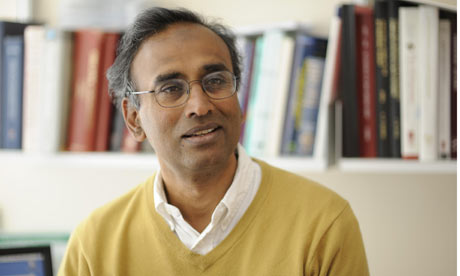
Scientist born and studied in Chidambaram gets Nobel


      An India-born structural biologist whose quest for scientific excellence took him from undergraduate schools in India to graduate and post- Doc studies in US and research in UK was jointly awarded the Nobel Prize in Chemistry on Wednesday for work on proteins that control life.

Dr Venkatraman ''Venky'' Ramakrishnan, 58, who had his early education in the temple town of Chidambaram, Tamil Nadu, and Vadodra, Gujarat, before he made tracks to the United States, joined the long list of peripatetic Indians who had early education in India but thrived in the western academic eco-system, to have won the Nobel. Also with a chemistry Nobel, Indians or those with an India-connect figure in all prize categories.

The Swedish Nobel Committee awarded the Prize to Dr Ramakrishnan, who is currently affiliated with the MRC Laboratory of Molecular Biology in Cambridge, UK, for his work on protein-producing ribosomes, and its translation of DNA information into life. He will share the Prize with Dr Thomas Steitz of Yale University, Connecticut, and Dr Ada Yonath of Weizmann Institute of Science in Israel.

In a statement following the announcement of the award, Dr Ramakrishnan expressed gratitude to ``all of the brilliant associates, students and post docs who worked in my lab as science is a highly collaborative enterprise.'' He credited the MRC Laboratory of Molecular Biology and the University of Utah for supporting his work and the collegiate atmosphere there that made it all possible.

``The idea of supporting long term basic research like that at LMB does lead to breakthroughs, the ribosome is already starting to show its medical importance,'' he said.

The practical importance of Dr Ramakrishnan's work arises from ribosomes being present in all living cells, including those of bacteria. Human and bacterial ribosomes are slightly different, making the ribosome a good target for antibiotic therapy that works by blocking the bacteriums ability to make the proteins it needs to function.

Ramakrishnan, Steitz and Yonath demonstrated what the ribosome looks like and how it functions at an atomic level using a visualisation method called X-ray crystallography to map the position of each of the hundreds of thousands of atoms that make up the ribosome, according to the MRC.

``This year's three Laureates have all generated 3D models that show how different antibiotics bind to the ribosome. These models are now used by scientists in order to develop new antibiotics, directly assisting the saving of lives and decreasing humanity's suffering,'' the Nobel citation explained.

Scientists say growing knowledge of the ribosome has created targets for a new generation of antibiotics. The instruction manual for the creation of proteins is DNA, but the ribosome is the machine which takes information transcribed onto messenger RNA and turns it into proteins.

Elaborating, the MRC said Dr Ramakrishnan's basic research on the arrangement of atoms in the ribosome has allowed his team not only to gain detailed knowledge of how it contributes to protein production but also to see directly how antibiotics bind to specific pockets in the ribosome structure. Dr Ramakrishnan will share the 10 million Swedish kronor ($1.4 million) Nobel Prize money (1/3rd each), in a ceremony in Stockholm on December 10.